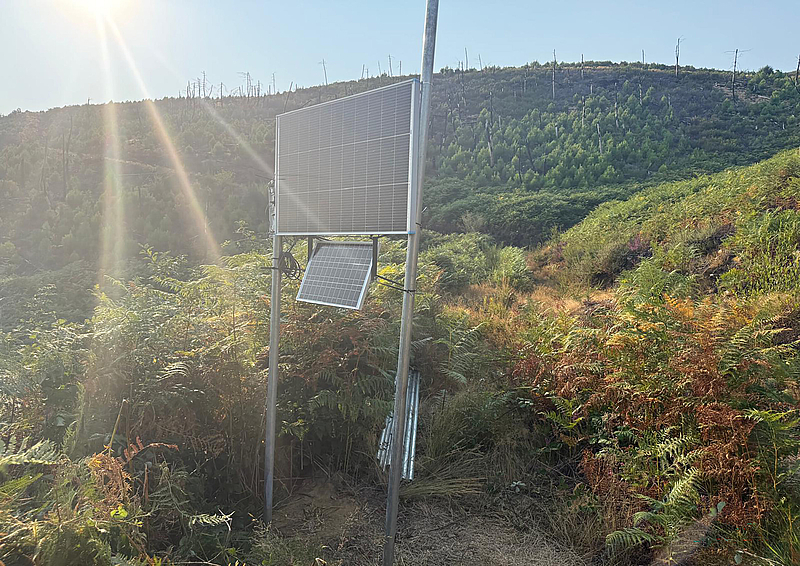
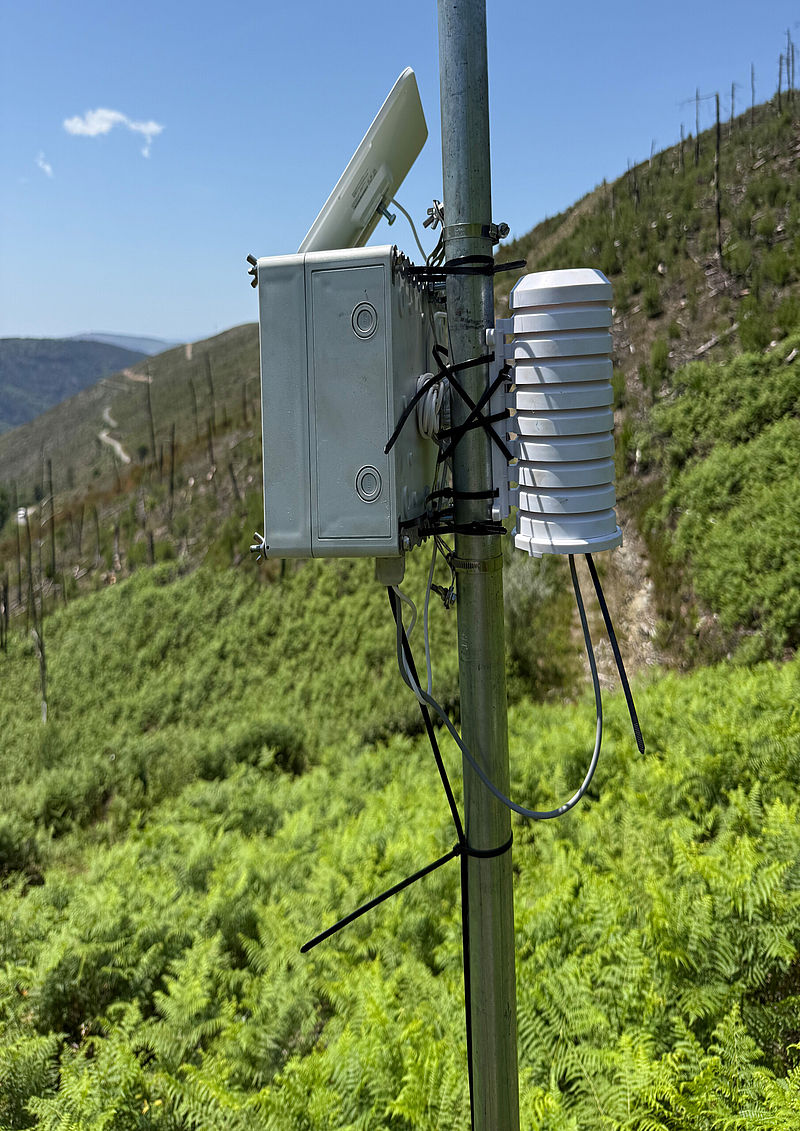
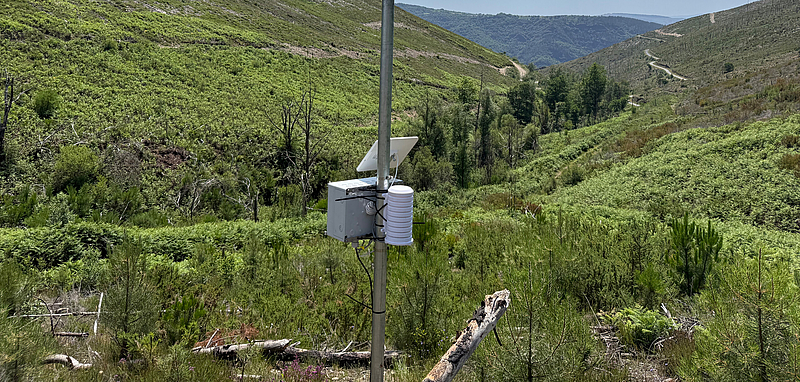
The project focuses on the question of how modern technology can help monitor and better understand the development of young trees after reforestation. In the mountainous region of O Courel in the province of Lugo, the measurement systems developed by the students record, among other things, soil moisture, temperature, pH value and the electrical conductivity of the soil, as well as air temperature and humidity. The measurement data is transmitted wirelessly and can also be monitored from Bielefeld in the future.
GEOS and TK PC in use
For the assembly of the measurement systems, Spelsberg provided several enclosures for harsh operating conditions. Among other products, GEOS 3030 22-o and TK PC 2518-11-m PV are used. The selection of the solutions was therefore of particular importance for the project. Because in the Galician mountains, sensitive electronics must be reliably protected against weather influences such as solar radiation. As Spelsberg’s TK series with IP66 protection offers high resistance, among other things, this product solution is particularly suitable for the project. The GEOS series, with IP66, IP67 and IP69 protection, also provides reliable protection against the ingress of dust and water. Manufactured from high-quality polycarbonate, the enclosures are UV- and temperature-resistant and impact-resistant to IK08 or IK09. “As experts in electrical installation and enclosure technology, we know how crucial reliable protection is for electronic components. Especially when technology is used under demanding conditions. That is why we are happy to support the CSBME’s commitment, and we are pleased that our products are part of a project that combines technical training with sustainability and international exchange,” says Andre Sprey, Regional Sales Manager Westphalia North at Spelsberg.
Energy-autonomous monitoring technology reliably protected by Spelsberg
The systems assembled by the trainees operate completely autonomously using solar panels and integrated batteries. The measurement nodes transmit their data to a central receiving station via LoRa radio technology. A successful test over five kilometres confirmed the range of the radio connection. Initially, five functioning transmitter nodes and the central receiving station were installed in the mountain region. The additional measurement nodes are to be added successively.
For Spelsberg, supporting the Erasmus+ project is an example of the many ways in which outdoor and industrial enclosures can be used. The robust enclosures provide the necessary foundation for the students’ self-developed monitoring technology to remain functional over the long term under challenging conditions. At the same time, the cooperation enables the aspiring specialists to apply their technical knowledge to a practical international task and gain first-hand experience of the requirements for enclosure solutions.
By confirming the button "Allow all cookies", you agree to the use of the cookies. By clicking on the "Configure" button, you can select which cookies you wish to allow.
You can change or revoke your consent at any time within our data protection declaration.